Jump to:
Planning for an exciting sailing in the Cyclades in 2026? Departing from Lavrion, just 40 minutes from Athens Airport, the Cyclades offer one of the most rewarding yacht itineraries in Greece. This guide will help you plan your Cyclades sailing itinerary, understand how the Meltemi wind shapes every passage, and choose the best route for your crew—from relaxed island hops to full-on Aegean adventures.
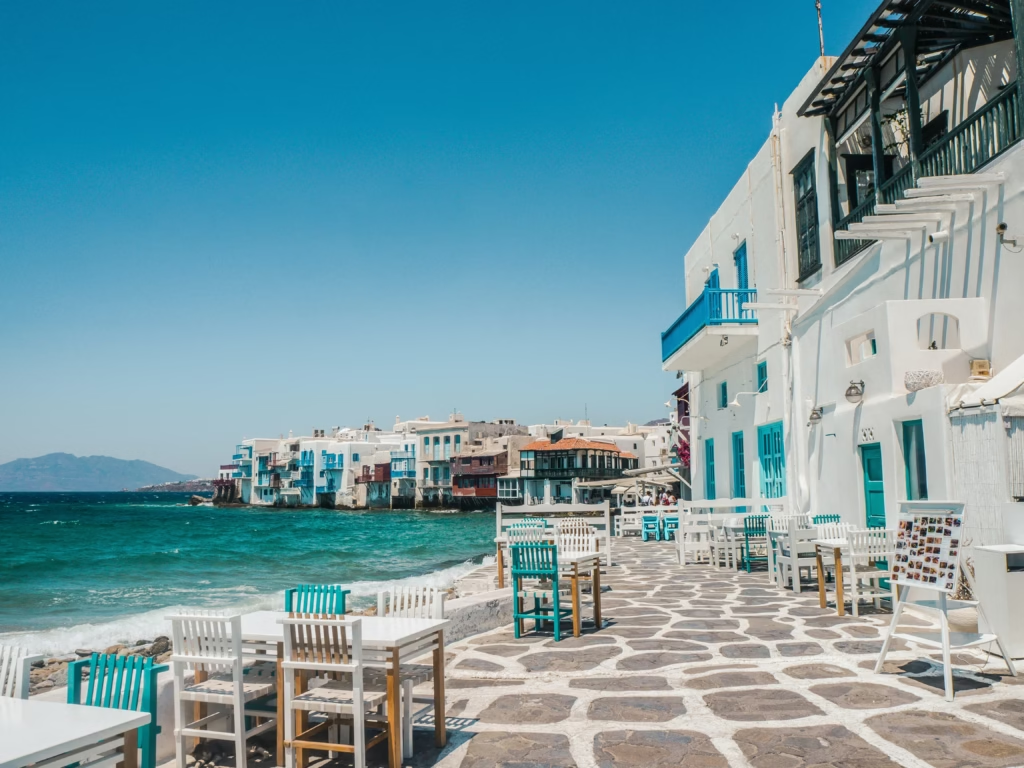
The Cyclades are the beating heart of Aegean sailing—a cluster of sun-baked islands where whitewashed villages tumble down rocky hillsides, windmills guard the harbors, and turquoise anchorages stretch as far as the eye can see.
If you’re planning to charter a yacht in Greece in 2026, few routes offer the same sense of freedom and challenge as sailing the Cyclades from Lavrion. But before you hoist the sails, there’s one force of nature you’ll need to understand: the Meltemi wind.
This guide explains what makes the Meltemi so influential, how to plan your route accordingly, and offers two optimized itineraries—one for a relaxed 7-day island-hopping adventure and another for seasoned sailors seeking a more demanding voyage.
Whether you’re renting a sailing yacht or catamaran through boat.rent/, this comprehensive guide will help you make the most of your Cyclades sailing experience.
The Meltemi: The Cyclades’ Defining Wind
The Meltemi is the soul—and sometimes the test—of every Aegean sailor. This seasonal north/northeast wind blows from June to September, peaking during July and August. On paper, forecasts may show a manageable 20–25 knots, but gusts can easily climb above 35–40 knots, especially in open channels or between islands. It does a great job of cooling the islands, but don’t be surprised to see 2–3-meter seas with 4–8-second intervals in exposed areas.
Unlike other Mediterranean breezes, the Meltemi isn’t just local weather—it’s a large-scale wind system that can last for several days or even weeks. Its predictability is both a blessing and a challenge: you can plan around it, but you can’t ignore it.
Acceleration Zones to Watch
Certain stretches of the Cyclades funnel the Meltemi into powerful bursts known as acceleration zones. The most notable include:
- Between Paros and Naxos, where gusts can suddenly double the base wind speed.
- Between Andros and Tinos, where a narrow channel funnels the wind dramatically.
- Between Mykonos and Tinos, where the open Aegean and local geography amplify the wind.
When heading south, the Meltemi offers exhilarating downwind sailing—but remember, you’ll need to beat back north when returning to base in Lavrion. As local skippers often say: “What goes downwind must come back up.”
Pro Tip: If you’re new to Aegean sailing, avoid rigid itineraries. Build flexibility into your plan so you can wait out stronger wind days.
Check out our upcoming Guide to the Meltemi Wind for safety, sail-trimming, and anchoring tips.
Choosing Your Cyclades Route Based on Conditions & Experience
The beauty of the Cyclades is that there’s a route for every sailor—from relaxed coastal hops to longer open-water passages. Your best choice depends on:
- Wind strength during your week (check Windy or Poseidon forecasts).
- Crew experience and comfort with strong breezes and longer legs.
- Trip duration—7 days or longer.
Below are two proven route options from Lavrion: one designed for beginners or intermediate sailors (ideal when the Meltemi is strong), and one for experienced crews who want to explore deeper into the islands.
Relaxed Cyclades Itinerary from Lavrion (Beginner-Friendly)
(Beginner to Intermediate / Strong Meltemi Conditions)
Route: Lavrion → Kythnos → Serifos → Sifnos → Kea → Lavrion
These western islands sit partly in the lee of mainland Greece, offering smoother seas and well-protected anchorages—ideal when the Meltemi is howling offshore.
Sailing in the Cyclades route is perfect for first-time Greek charterers, families, or mixed-experience crews. The distances are shorter (15–25 NM), offering plenty of time to swim, explore, and enjoy authentic island life—without long, upwind legs on the final days.
Day 1: Lavrion → Kythnos (Kolona Bay)
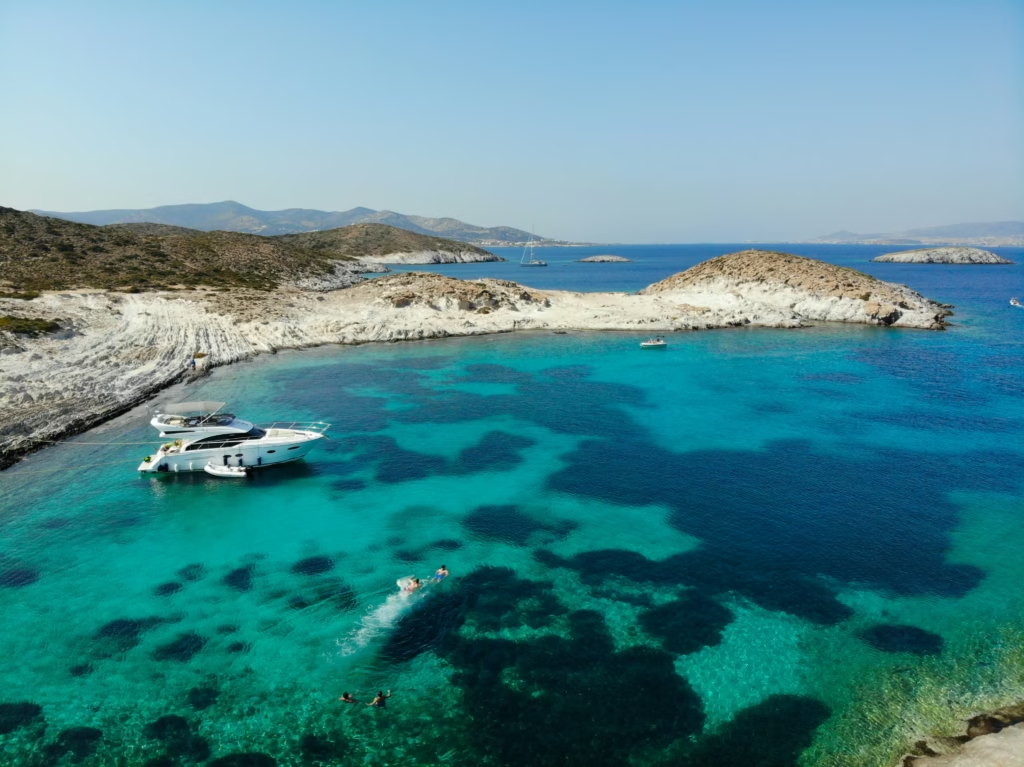
Depart from Lavrion, a well-equipped charter base just 40 minutes from Athens Airport. After a 4–5-hour sail, anchor in Kolona Bay, one of Greece’s most iconic anchorages—a sandbar connecting two hills with turquoise shallows on both sides. The eastern side offers excellent protection if you can get in early.
Day 2: Kythnos → Serifos
A relaxed morning sail (20 NM) brings you to Serifos, a rugged island with a charming hilltop Chora. Anchor or moor in Livadi Harbor on the south side, and take the bus (or hike) up to the Chora for sunset and dinner.
Day 3: Serifos → Sifnos
Head southeast to Sifnos (20 NM). Known for pottery, cuisine, and quiet authenticity, Sifnos offers great shelter in Kamares Bay. Rent a scooter to explore Apollonia and the mountain monasteries inland.
Day 4–5: Sifnos → Kythnos (East Coast / Loutra)
Leave early to take advantage of calmer seas and lighter morning winds as you sail north toward Kythnos’ east side. If conditions are rough, pause in Serifos or a protected anchorage. Overnight at Loutra, a small harbor town known for its hot springs, excellent tavernas, and relaxed pace.
Day 6: Kythnos → Kea
Kea’s Vourkari Bay is your final island before heading home—a peaceful, upscale anchorage with great seafood and easy docking. If the wind is strong, this is one of the most secure places to shelter before your final passage.
Day 7: Kea → Lavrion
A short 2–3-hour sail back to Lavrion. Depart early; mornings are typically flatter before the wind builds.
Why this route works: Short hops, protected anchorages, and manageable sailing days even during peak Meltemi. It’s the perfect balance between adventure and relaxation.
Build a buffer day. If the Meltemi pins you in port for 24–48 hours, that extra time will save you from a stressful return.
Adventurous Cyclades Itinerary (10–14 Days)
(For Experienced Sailors / Calmer Wind Weeks)
Route: Lavrion → Kythnos → Paros → Mykonos → Syros → Kea → Lavrion
If you’re confident handling stronger winds or planning a two-week charter, this route delivers the full Aegean experience—wide crossings, iconic islands, and the thrill of open-water sailing. Take a few days on each island to explore or wait out stronger winds.
Day 1–2: Lavrion → Kythnos → Paros
Start with an easy leg to Kythnos, then continue south to Paros (45–50 NM). The Meltemi will likely be behind you here, making for fast, enjoyable sailing. Naoussa Bay is a favorite among sailors for its protection and nightlife. If winds are too strong, head instead to Paroikia, Paros’ main harbor.
Day 3–4: Paros → Mykonos (via Rineia & Delos)
Before heading to Mykonos, anchor off Delos, one of Greece’s most sacred archaeological sites. The nearby island of Rineia offers calm, clear anchorages—perfect for swimming or a quiet night before Mykonos’ buzz.
Day 5: Mykonos → Syros
A 30-NM upwind leg brings you to Syros, the administrative center of the Cyclades. Its capital, Ermoupoli, is a UNESCO-listed port blending Venetian architecture and Greek character. Great spot for refueling, provisioning, and enjoying a proper dinner ashore.
Day 6–7: Syros → Kea → Lavrion
Break the return north with a night in Kea before completing the loop to Lavrion.
Why this route works: It’s a true adventure—ideal for experienced crews who love long crossings and want to see the Cyclades’ cultural and geographical diversity.
⚠️ Caution: The Meltemi can trap boats in Mykonos or Paros for days. Always allow flexibility—your boat won’t sail itself home against 35 knots.
When to Sail the Cyclades (and Seasonal Alternatives)
The Cyclades sailing season runs from May through October, but conditions and island activity vary greatly through the year.
| Month | Conditions | Recommended For |
|---|---|---|
| May – Early July | Light-to-moderate winds, pleasant seas | Ideal balance |
| July – August | Strong Meltemi (20–35 knots) | Experienced sailors |
| September – Early October | Warm seas, lighter winds | Relaxed charters, photography, culture |
| Late October | Islands start to close; occasional storms | Quiet sailing weeks only |
If the forecast looks too windy or you’re sailing with family, consider the Saronic Gulf—just west of Lavrion. It offers scenic, sheltered waters, charming towns like Hydra and Poros, and simpler marina logistics.
👉 Related reading: Saronic Gulf Sailing Guide: The Best Alternative to the Cyclades
Practical Tips for Cyclades Sailors
Charter Base – Lavrion:
Located 40 minutes from Athens Airport, Lavrion is the ideal starting point for Cyclades routes. You’ll find supermarkets, provisioning services, and technical support within walking distance of the port.
Anchoring & Mooring:
- Most Cycladic harbors use stern-to mooring with your own anchor.
- Expect katabatic gusts in Meltemi zones.
- Marinas are limited but inexpensive; most anchorages are free.
Fuel & Water Stops:
Reliable refills in Lavrion, Kythnos (Loutra), Paros, Syros, and Kea.
Useful Apps:
Windy, Poseidon, PredictWind, and Navily for anchorage reviews and local mooring data.
Safety Quick-Check:
Reef early and often. Always brief the crew on MOB procedures, wear harnesses in 30+-knot gusts, monitor CH 16, and avoid pushing upwind if comfort or confidence fades.
What Type of Boat Should You Charter for the Cyclades?
Sailing in the Cyclades is best suited to yachts between 40 and 50 feet, whether monohull or catamaran. This size balances comfort, speed, and easy maneuvering through island harbors.
For Beginners or Families:
- 40–45 ft Catamarans (e.g., Lagoon 40, Bali 4.2, Fountaine Pajot Isla 40)
- Why: Dual engines make docking easier, large deck space for relaxing at anchor, and stable handling in crosswinds.
- Consider: Slightly higher charter cost and more exposure to gusts on open decks.
- Mid-size Monohulls (38–42 ft) (e.g., Beneteau Oceanis 41, Bavaria 42, Jeanneau Sun Odyssey 410)
- Why: Easier for smaller crews, more affordable, and well-balanced under sail.
- Best for: 2–3 cabins and shorter 7-day charters on the western Cyclades route.
For Experienced Sailors or Longer Charters:
- 45–50 ft Monohulls (e.g., Dufour 470, Hanse 458, Beneteau Oceanis 46.1)
- Why: Excellent performance upwind and more comfortable in heavy seas.
- Ideal for: Longer open-water legs (Paros–Mykonos–Syros loop).
- 45–50 ft Catamarans (e.g., Lagoon 46, Fountaine Pajot Elba 45)
- Why: Perfect for groups or families who value living space and privacy, with good power for longer crossings.
- Consider: Book well in advance; demand for catamarans peaks in July–August.
Pro Tip: Most Cyclades charters are bareboat, meaning you skipper it yourself. If you don’t hold an ICC or equivalent license, you can always hire a local skipper who knows the Meltemi and hidden anchorages.
Sail Smart, Stay Flexible
Sailing the Cyclades is about more than island-hopping—it’s about understanding nature’s rhythm and adapting to it. The Meltemi wind may challenge you, but it also defines the exhilarating spirit of Aegean sailing.
By planning around the wind, choosing the right route, and staying flexible, you’ll discover the true magic of Greece’s most iconic islands.
So whether you’re chasing sunsets in Serifos or charting a bold course to Paros—make 2026 the year you sail smarter, farther, and freer with boat.rent/.
Sailing in the Cyclades FAQ
What is the Meltemi wind in Greece?
The Meltemi is a seasonal north/northeast wind that blows across the Aegean Sea from June to September, peaking in July and August. It clears the air and cools the islands but can gust to 35–40 knots, creating lively sailing conditions.
Where is the Meltemi strongest in summer?
The Meltemi is strongest in the central and northern Cyclades, especially between Paros and Naxos, Mykonos and Tinos, and Andros and Tinos, where narrow channels funnel and accelerate the wind.
When is the best time to sail the Cyclades?
For warm seas and manageable winds, sail between May–early July or September–mid-October. July–August bring stronger Meltemi conditions suited to experienced sailors. Beginners should consider the Saronic Gulf during peak season.
What are the best Cyclades islands to visit by yacht?
Top sailing stops include Kythnos (Kolona Bay), Sifnos (authentic villages and cuisine), Paros (great anchorages and nightlife), Syros (culture and provisioning), and Kea, the final peaceful stop before Lavrion.
Is sailing in the Cyclades suitable for beginners?
Yes—with the right route. Stick to the western Cyclades loop (Lavrion–Kythnos–Serifos–Sifnos–Kea–Lavrion) during strong Meltemi periods, keep legs short, and reef early. You can also hire a local skipper for extra safety.
Is it safe to sail during the Meltemi?
It’s safe when handled with respect. Modern yachts handle the wind well, but short, steep seas can be tiring. Monitor forecasts, reef early, and don’t push beyond your comfort level. Never underestimate the Meltemi.
Do I need a license or can I hire a skipper?
In Greece you need an ICC or equivalent plus an experienced co-skipper. If you don’t hold a license, hire a skipper—it’s an easy way to learn the area while enjoying a stress-free trip.
How long are typical daily legs on these routes?
On the relaxed loop, plan for 15–25 NM per day (3–5 hours). On the adventurous route, expect 30–50 NM legs and more open-water sailing.